Important Considerations for Microneedling
Are you considering microneedling? The anti-aging and complexion rejuvenation benefits are profound!
There are some general considerations you should be aware of before microneedling. Let's walk through the basics.
IS MICRONEEDLING RIGHT FOR ME?
Before microneedling, we recommend consulting with your healthcare professional to make sure it's suitable for your needs. You may also want to look over the following guides:
- Is microneedling safe for your skin type?
- What is Collagen Induction Therapy?
- How to microneedle at home — everything you need
- What to expect after microneedling
- Which needle depth should you use?
WHAT IS MICRONEEDLING?
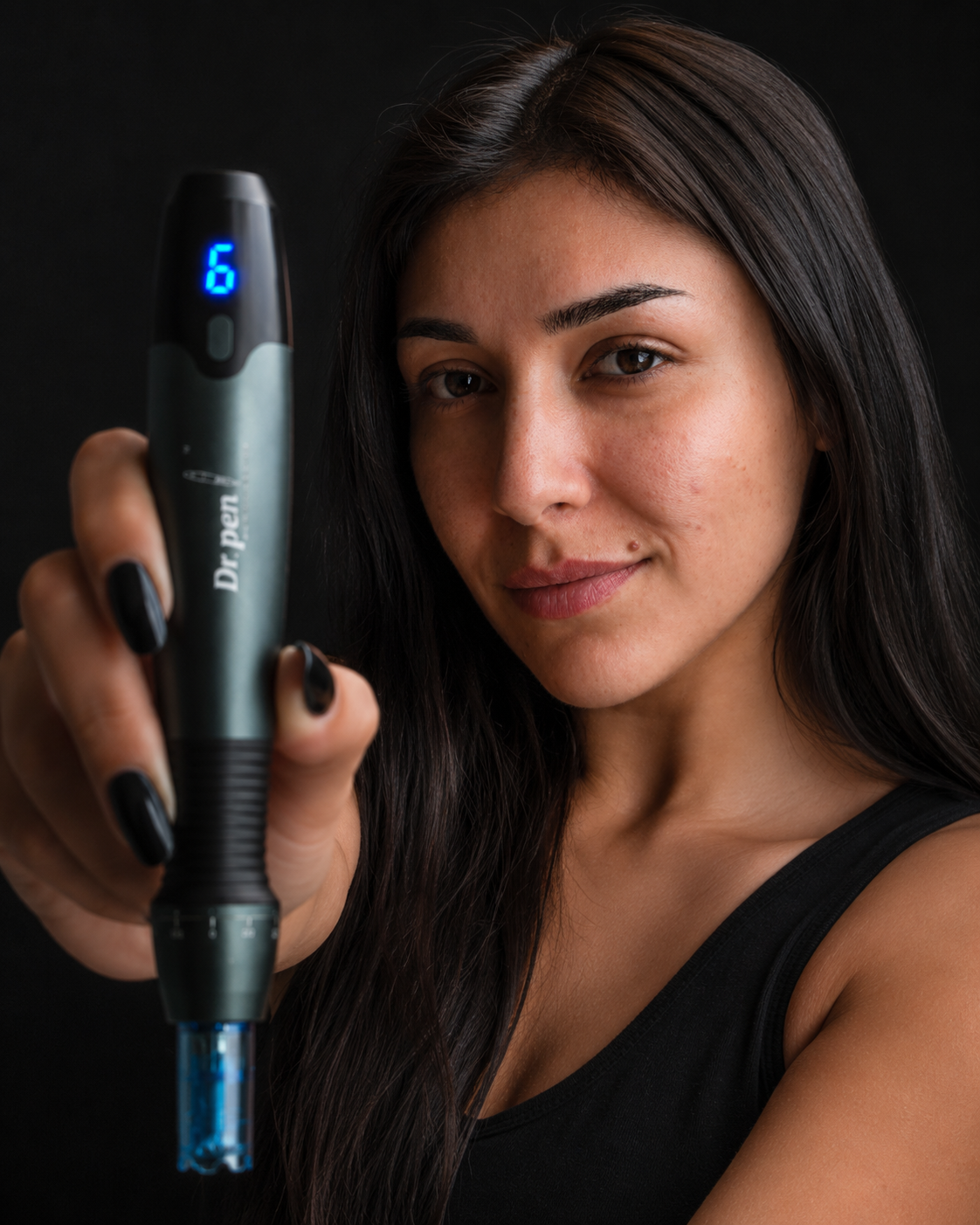
Microneedling is a cosmeceutical procedure — a procedure that achieves cosmetic results using medical-grade devices. When microneedling, tiny needles from a motorized microneedling pen are used to make microscopic punctures in the skin.
Microneedling is also referred to as Collagen Induction Therapy (CIT). This is because the microscopic punctures created during the treatment — also known as microchannels — trigger a trauma/healing response in your skin. Your skin perceives that there has been a small injury and, as a result, floods the tissue with the signal to naturally produce more collagen and elastin to heal the 'wound'.
As the skin heals, skin imperfections soften and can disappear completely.
Microneedling is helpful for the treatment of fine lines, wrinkles, scarring, hyperpigmentation, uneven skin tone, stretch marks and dryness or dullness, making it an ideal anti-aging treatment.
IMPORTANT CONSIDERATIONS OF MICRONEEDLING
Allow time for your skin to recover
After microneedling, skin redness is common — and it may last for several days. For this reason, you'll want to leave plenty of time between microneedling and any important events you have scheduled.
Protect your skin from the sun
During this time you should take extra care to protect your skin from the sun, as microneedling can make your skin more photosensitive. Sun exposure without adequate sunscreen can increase your risk of developing hyperpigmentation, so always wear a broad-spectrum sunscreen of SPF 30 or higher — ideally SPF 50 and mineral-based. We cover this in more detail in why sunscreen matters after microneedling.
Hygiene is important
Microneedling can carry other risks, such as scarring or infection, if care is not taken to perform the treatment hygienically. It's crucial to remember that microneedling is a cosmeceutical treatment and you are creating microscopic open wounds in the skin, so appropriate care must be taken to create a sterile environment and to keep your device sterile too.
Always wipe down any benches or surfaces where you will be microneedling with antiseptic spray, tie your hair back away from your face, and cleanse your skin before you start. Wash your hands thoroughly and wear gloves.
Only use cartridges once
Microneedling cartridges are single use only and should be disposed of after each treatment. Always open a new cartridge packet every time you microneedle. If you're not sure which cartridge suits your treatment, our cartridge guide and cartridge comparison chart walk through every pin count.
Only use a device you can verify
Counterfeit microneedling pens are widely sold online. They copy the packaging, the labeling and even the security stickers of genuine devices, but they are not built to the same standards — needle alignment, depth accuracy and motor consistency are the first things to go, and those are exactly the things that keep the treatment safe.
Before you use any device, confirm it is genuine. Every Dr. Pen device we ship is serial-checked before dispatch, and each one carries a code you can verify yourself. Here's how to check that your Dr. Pen is real — it takes under a minute and we'd rather you did it than didn't, wherever you bought it.
If in doubt, check with your doctor
Avoid microneedling if you have cuts or abrasions on your skin, active acne, or any other skin condition that may place you at higher risk of injury or infection.
Microneedling should also be avoided by anyone under 18 years of age.
If in doubt, seek advice from your healthcare professional to assess whether microneedling is right for your needs.
HOW DO I START MICRONEEDLING, AND WHAT DO I DO IF I NEED HELP?
Whether it's choosing the right microneedling pen for your needs, understanding how to get the most from your treatments, making sure your environment is sterile, or simply working out how to get closer to the results you want — we're here to help.
Not sure where to start? Our model comparison guide takes you through every Dr. Pen device side by side, and our needle depth guide covers what to use where on the face and body.
Still have a question? Get in touch with our team and we'll answer it properly — before you buy, and long after.